Learn · 3 min read
The Filter I Actually Use
What decides whether a traditional practice makes it onto Junoon, and what gets left out.
junoon
Read more →
Ancient wisdom for your modern life.
Learn · 3 min read
What decides whether a traditional practice makes it onto Junoon, and what gets left out.
Read more →
Learn · 3 min read
Why every practice on Junoon has to survive one question before it makes the app.
Read more →
Learn · 6 min read
Svātmārāma's central claim: the mind follows the breath. Ten minutes of breath-synchronised movement increases HRV acutely; thirty days shifts the baseline.
Read more →
Learn · 5 min read
Krishnamacharya turned the sickly Iyengar into the most influential yoga teacher of the 20th century through a modified daily practice. Flexibility is an output, not an entrance requirement.
Read more →
Learn · 7 min read
Prajnaparadha: knowingly acting against what you already know your body needs. Overriding the natural sleep window is not insomnia, it is a choice.
Read more →
Learn · 4 min read
Charaka's 13 types of Agni map gut behaviour to systemic health. The enteric nervous system, comprised of 500 million neurons, and 90% of the body's serotonin confirms his core claim.
Read more →
Learn · 6 min read
Ojas is built during rest and spent during activity. The clinical picture of Ojas depletion is what we now call burnout.
Read more →
Learn · 6 min read
Charaka and Sushruta specified sleep position as a clinical variable. Modern sleep medicine has confirmed each recommendation.
Read more →
Learn · 3 min read
Charaka prescribed turmeric in 39 formulations with a fat source and black pepper 2,000 years before those mechanisms were characterized.
Read more →
Learn · 5 min read
Patanjali defined meditation as unbroken attention and assumed the flow would break. Returning is the practice.
Read more →
Learn · 4 min read
Sushruta described thyroid disease in 600 BCE, identified its geographic and dietary causes, and prescribed iodine-rich interventions 2,500 years before Western medicine named the thyroid gland.
Read more →
Learn · 5 min read
Charaka identified sleep's main destroyers: heavy food after dark, sweet food that disrupts deep cycles, irregular timing. Modern sleep research has confirmed all three.
Read more →
Learn · 6 min read
Three physiological phases; kapha youth, pitta middle years, and vata elder years,each requiring different inputs. The body at forty isn't declining; it's a different system.
Read more →
Learn · 3 min read
Charaka prescribed a five-minute morning sequence as the minimum daily maintenance for the body to function. Each practice anchors to something you're already doing, which is why it holds.
Read more →
Learn · 4 min read
Patanjali's second sutra defines yoga as the stilling of mental fluctuations, clinical, not spiritual. His eight-limb system trains the mind to generate less of the suffering it creates through its own unexamined activity.
Read more →
Learn · 5 min read
Vagbhata identified daily routine as the primary health intervention. The Nobel Prize for the molecular mechanism behind circadian biology came thirteen centuries later.
Read more →
Learn · 5 min read
Krishnamacharya's principle was that the practice adapts to the student, not the other way around. Patanjali's definition of a posture was stable and comfortable. Nothing more.
Read more →
Learn · 6 min read
Svātmārāma identified that the left and right sides of the body run on opposing energies and built alternate nostril breathing to balance them. The research confirms it shifts the nervous system out of overdrive in a single session.
Read more →
Learn · 6 min read
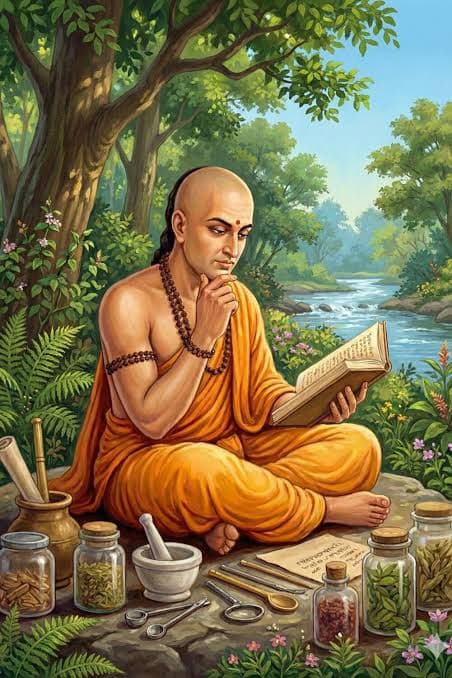
The Charaka Samhita -the text that compiled his teaching, isn't a list of remedies. It's a diagnostic framework. The premise underneath all of it is simple: the same substance can heal one person and harm another. The same food that settles a cold, dry body in winter might aggravate a hot, inflamed body in July. Context is the medicine.
Read more →
 Junoon.
Ancient wisdom for your modern life.
Learn · 3 min read
What decides whether a traditional practice makes it onto Junoon, and what gets left out.
Read more →
Learn · 3 min read
Why every practice on Junoon has to survive one question before it makes the app.
Read more →
Learn · 6 min read
Svātmārāma's central claim: the mind follows the breath. Ten minutes of breath-synchronised movement increases HRV acutely; thirty days shifts the baseline.
Read more →
Learn · 5 min read
Krishnamacharya turned the sickly Iyengar into the most influential yoga teacher of the 20th century through a modified daily practice. Flexibility is an output, not an entrance requirement.
Read more →
Learn · 7 min read
Prajnaparadha: knowingly acting against what you already know your body needs. Overriding the natural sleep window is not insomnia, it is a choice.
Read more →
Learn · 4 min read
Charaka's 13 types of Agni map gut behaviour to systemic health. The enteric nervous system, comprised of 500 million neurons, and 90% of the body's serotonin confirms his core claim.
Read more →
Learn · 6 min read
Ojas is built during rest and spent during activity. The clinical picture of Ojas depletion is what we now call burnout.
Read more →
Learn · 6 min read
Charaka and Sushruta specified sleep position as a clinical variable. Modern sleep medicine has confirmed each recommendation.
Read more →
Learn · 3 min read
Charaka prescribed turmeric in 39 formulations with a fat source and black pepper 2,000 years before those mechanisms were characterized.
Read more →
Learn · 5 min read
Patanjali defined meditation as unbroken attention and assumed the flow would break. Returning is the practice.
Read more →
Learn · 4 min read
Sushruta described thyroid disease in 600 BCE, identified its geographic and dietary causes, and prescribed iodine-rich interventions 2,500 years before Western medicine named the thyroid gland.
Read more →
Learn · 5 min read
Charaka identified sleep's main destroyers: heavy food after dark, sweet food that disrupts deep cycles, irregular timing. Modern sleep research has confirmed all three.
Read more →
Learn · 6 min read
Three physiological phases; kapha youth, pitta middle years, and vata elder years,each requiring different inputs. The body at forty isn't declining; it's a different system.
Read more →
Learn · 3 min read
Charaka prescribed a five-minute morning sequence as the minimum daily maintenance for the body to function. Each practice anchors to something you're already doing, which is why it holds.
Read more →
Learn · 4 min read
Patanjali's second sutra defines yoga as the stilling of mental fluctuations, clinical, not spiritual. His eight-limb system trains the mind to generate less of the suffering it creates through its own unexamined activity.
Read more →
Learn · 5 min read
Vagbhata identified daily routine as the primary health intervention. The Nobel Prize for the molecular mechanism behind circadian biology came thirteen centuries later.
Read more →
Learn · 5 min read
Krishnamacharya's principle was that the practice adapts to the student, not the other way around. Patanjali's definition of a posture was stable and comfortable. Nothing more.
Read more →
Learn · 6 min read
Svātmārāma identified that the left and right sides of the body run on opposing energies and built alternate nostril breathing to balance them. The research confirms it shifts the nervous system out of overdrive in a single session.
Read more →
Learn · 6 min read
The Charaka Samhita -the text that compiled his teaching, isn't a list of remedies. It's a diagnostic framework. The premise underneath all of it is simple: the same substance can heal one person and harm another. The same food that settles a cold, dry body in winter might aggravate a hot, inflamed body in July. Context is the medicine.
Read more →